
Struggling with Stubborn Belly Fat That Just Won’t Go Away?
You’ve tried eating healthy. You’ve tried working out.
Yet those same problem areas remain… and it’s frustrating.
What if the real issue isn’t your diet…
but your body’s internal fat-burning switch?
FREE Training Video Reveals:
The Breakthrough Method to “Vaporize” Stubborn Fat Cells
(No extreme diets. No endless cardio. No stress.)
Discover how real people are finally burning fat, naturally and consistently.
Click below to watch your FREE training while it’s still online:
➡️ YES! Show Me The Free Video
Symptoms of tennis elbow include pain on the outside of the elbow, point tenderness (pain when touched) at the outermost point of the elbow, pain when grabbing or holding something around the wrist, stiffness in the elbow and hearing a popping sound in the morning, and pain when lifting the wrist with the palm facing down to lift something heavy.
Tennis Elbow Treatment
Treatment and management of tennis elbow focus on reducing pain Discomfort caused by tightness of muscle and tendon tissue in the affected area. Also resolved an issue modifying duplicate activities that caused this condition. Avoiding activities that require grasping, twisting, or lifting will help restore damaged tissue. Applying an ice pack can reduce swelling in the affected area and thus improve circulation. Analgesics are usually recommended.
Tennis Elbow Exercises
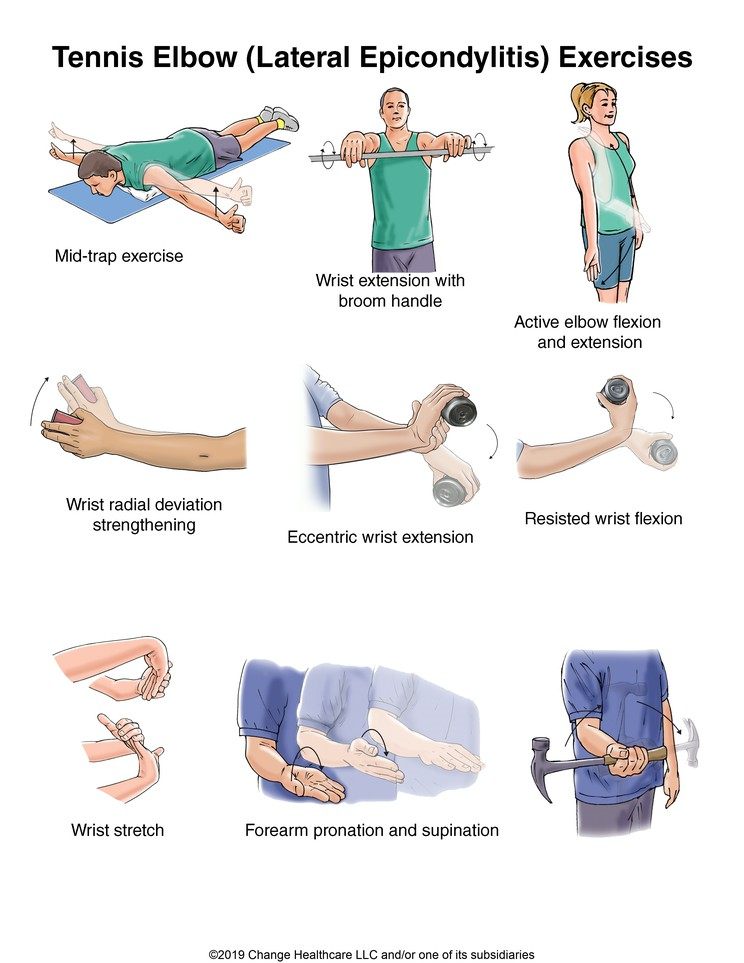
Tennis elbow treatment exercises can help strengthen weak forearm muscles, which may be the root cause of the problem. These exercises can also be used as follow-up treatment or as rehabilitation exercises for people who have had tennis elbow treatment or tennis elbow surgery.
- Supination with dumbbells: The supinators are large forearm muscles that attach to the elbow. It is responsible for upward rotation of the palm and is often involved in the movements that cause tennis elbow. Holding light to medium dumbbells, rotate your forearms so they lift forward and down.
- Wrist extension: The muscle group responsible for flexing the wrist is the wrist extensors. They are small muscles that connect to the elbow and can be easily overused, especially when playing racquet sports. Holding a light to moderately heavy dumbbell, place your forearms on your thighs or on a table while hanging from your wrists palms down Move away from your thighs or the end of the table. Keeping your forearms in place, bend your wrists upward and repeat.
- Wrist bend: The muscle group that works opposite the wrist extensors is the wrist flexors. These are small muscles that connect to the elbow and can also be easily overused, causing inflammation and pain. Holding a light to moderately heavy dumbbell, place your forearms on your thighs or on a table while hanging from your wrists Palms up Move away from your thighs or the end of the table. Keeping your forearms still, bend your wrist upwards and repeat this exercise also known as wrist curls.
Your doctor may recommend steroid injections Helps reduce inflammation and pain. Steroid injections to treat tennis elbow are often used as a last resort because they can have troubling side effects, including injection site pain, atrophy, and tendon damage around the elbow. Physical therapy, splints and braces, blood injections, shock wave therapy, and surgery are among the more advanced treatments for tennis elbow.
Rest is the first choice in treating tennis elbow. Because this allows the body to repair itself. The use of anti-inflammatory drugs and alternating hot and cold treatments is the second step of treatment. For long-term support during the healing process, a device called a “tennis elbow strap” designed to relieve pressure on the affected area can help. Exercise, stretching and massage have also been shown to be effective.
If none of these traditional options help patients relieve elbow disease, they may consider alternative treatments before surgery. Acupuncture is one of the alternative therapies, along with heat therapy, splinting, laser therapy, physical therapy and trigger point therapy.
Tennis Elbow Acupuncture
Acupuncture combined with massage has been found to be effective in treating tennis elbow or lateral epicondylitis. A study involving 90 athletes concluded that acupuncture and traditional Chinese massage are effective in treating lateral epicondylitis.[1]
The participating athletes are divided into three groups. The first group received only acupuncture treatment. The second group received massage alone, and the third group received a combination of acupuncture and traditional Chinese medicine massage. Significantly positive clinical results were achieved in all 3 groups. The combination of acupuncture and massage resulted in greater improvement than the other groups, suggesting a synergistic effect.[2]
In a smaller but similar study involving fire needle acupuncture, Participants received fire needle acupuncture at the trigger point or Ashi point at the most painful point on the affected elbow. Researchers found that patients who received fire needle acupuncture experienced pain relief and could move their joints in all directions without restriction.[3]
Tennis Elbow Massage
A massage therapist may help relieve tennis elbow pain. A common technique used to relieve elbow pain is called friction, Or use fingers and thumbs for local soft tissue manipulation. Friction can be done at home without seeking professional help, but most non-practitioners don’t know what to look for or how to perform the treatment, which is why it’s best to use a qualified sports massage therapist. Deep massage, stretching, and strengthening of the affected tissue can also be beneficial if performed properly.[4]
Tennis elbow brace
A tennis elbow brace or tennis elbow strap on the upper part of the forearm can provide pressure to help relieve the symptoms of tennis elbow. Stands are most useful when you need to twist or grab something. Wearing a tennis elbow brace or strap on the forearm just below the elbow can take pressure off the affected tendon and distribute the force throughout the arm.
The fit of a tennis elbow brace or strap is one of the most important factors when considering a tennis elbow brace. It should fit snugly to provide compression and support without cutting off circulation. You’ll also want to make sure it’s a breathable brace and can absorb sweat while wearing it. A good elbow band, band, or brace combined with appropriate rest and anti-inflammatory aids is the simplest, most natural form of treatment, and is how most people treat tennis elbow.
tennis elbow surgery
Surgical treatment for tennis elbow should only be used as a last resort. If symptoms do not respond to non-surgical treatment after 6 to 12 months, tennis elbow surgery may be recommended. Most tennis elbow surgeries involve arthroscopic surgery to remove the diseased muscle and reattach the healthy muscle to the bone. Arthroscopic surgery allows the elbow joint to be viewed to ensure there are no other sources of pain and the damaged tendon can be removed without separating the tendon from the bone. Unfortunately, some studies suggest that surgery may not be effective for long-term treatment of tennis elbow.[5] [6]
How long does it take for tennis elbow to heal?
Once you rest and start treatment, you may start to feel better within 2 to 4 weeks, but the tendon may take up to 6 to 12 months to heal. In extreme cases, the pain can last two years or more. If your pain and symptoms don’t improve after 6 weeks of home treatment, your doctor may first recommend corticosteroid injections, which can give you some short-term relief so that you can begin rehabilitation and exercise.