

Struggling with Stubborn Belly Fat That Just Won’t Go Away?
You’ve tried eating healthy. You’ve tried working out.
Yet those same problem areas remain… and it’s frustrating.
What if the real issue isn’t your diet…
but your body’s internal fat-burning switch?
FREE Training Video Reveals:
The Breakthrough Method to “Vaporize” Stubborn Fat Cells
(No extreme diets. No endless cardio. No stress.)
Discover how real people are finally burning fat, naturally and consistently.
Click below to watch your FREE training while it’s still online:
➡️ YES! Show Me The Free Video
What is visceral fat and its normal values
Hello everyone,
In my last article about Dexa scans, I mentioned that one of the uses of having a dexa scan is to understand your total body composition, including measuring subcutaneous fat and visceral fat.
Visceral fat, also known as intra-abdominal fatis a type of fat that accumulates in the abdominal cavity, surrounding vital organs such as the liver, pancreas, and intestines. Beyond that, it surrounds the heart.
This type of fat is different from subcutaneous fat, which is found under the skin.
While subcutaneous fat serves as an energy reserve and provides insulation, visceral fat plays a more complex role in body metabolism and can have adverse health effects if present in excess. “
Visceral fat is Biologically active And produce various hormones and inflammatory substances, disrupting normal metabolic functions.
To understand this, read this downloadable PDF document –
High levels of visceral fat are associated with an increased risk of metabolic syndrome, cardiovascular disease, type 2 diabetes, and certain cancers.
This makes understanding and monitoring visceral fat levels critical to maintaining overall health.
Normal values for visceral fat may vary depending on gender, age, and individual physiology.
Typically, waist circumference is a useful indicator of visceral fat levels, with a waist circumference of 40 inches for men and 35 inches for women indicating an increased risk of health problems. Measuring the waist-to-hip ratio can also provide insight, as a higher ratio indicates higher levels of visceral fat accumulation.
Advanced imaging techniques, such as MRI, CT scans, and DEXA scans, allow precise assessment of visceral fat distribution but are not usually necessary for routine evaluation.
Instead, the combination of waist circumference and body mass index (BMI) can serve as an effective tool in determining the health risks associated with visceral fat.
Values outside the recommended range may prompt further investigation, such as a Dexa scan and lifestyle changes to mitigate health risks.
Therefore, understanding the normal values and effects of visceral fat is critical to taking proactive steps toward health and well-being.
The dangers of too much visceral fat
Visceral fat and its normal values
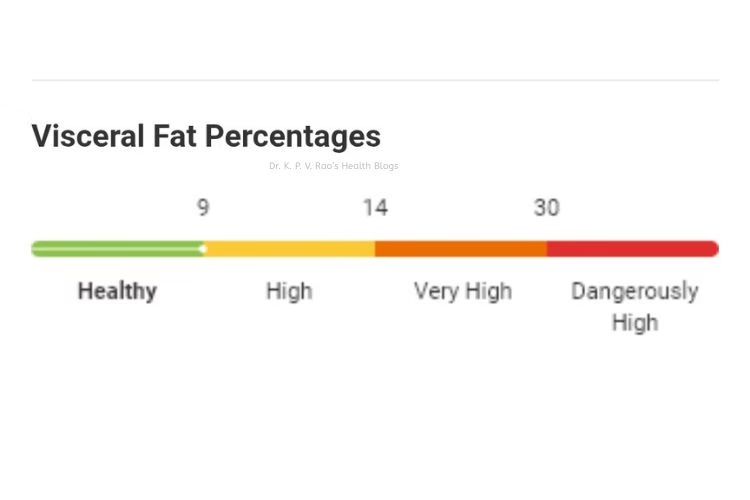
Excess visceral fat is a significant health concern, primarily because it lies deep within the abdominal cavity, surrounding vital organs such as the liver, pancreas, and intestines. The chart below shows the healthy and unhealthy range percentages for visceral fat on a smart scale:

Unlike subcutaneous fat, which lies beneath the skin, visceral fat poses a greater risk due to its metabolic activity.
Scientific research shows a strong correlation between high levels of visceral fat and a variety of serious health conditions, highlighting the importance of monitoring and managing such fat deposits.
One of the most concerning risks associated with excess visceral fat is developing type 2 diabetes.
This type of fat can cause insulin resistance, a condition in which the body’s cells cannot respond effectively to insulin, causing blood sugar levels to rise.
Research shows that people with higher levels of visceral fat are more likely to develop insulin resistance and, if not managed properly, may develop type 2 diabetes.
Additionally, visceral fat is a known contributor to cardiovascular disease. It produces inflammatory substances that may disrupt normal cardiovascular function and promote atherosclerosis (the buildup of fatty deposits in the arteries).
Numerous studies show that people with higher levels of visceral fat are at increased risk of heart disease and high blood pressure, complicating their overall health.
Metabolic syndrome is another condition closely associated with excess visceral fat.
The syndrome is characterized by a cluster of risk factors, including elevated blood pressure, elevated blood sugar, excess fat around the waist and abnormal cholesterol levels, which together increase the risk of heart disease, stroke and diabetes.
Research shows that visceral fat accumulation significantly increases the likelihood of developing metabolic syndrome, a clear indicator of underlying health problems. “
Given these concerning associations, it is crucial to track visceral fat levels for long-term health.
Understanding the dangers of excess visceral fat allows individuals to make healthier lifestyle choices, monitor their body composition, and consult a health care professional when necessary.
By effectively addressing this type of fat, people can mitigate associated health risks and improve overall well-being.
Healthy range of visceral fat:
Visceral fat calculator
Understanding the healthy range of visceral fat is critical to maintaining overall health.
Visceral fat, often referred to as belly fat, surrounds vital organs such as the heart, liver, kidneys, and if levels are above 9%, it can have a significant impact on a person’s health. “
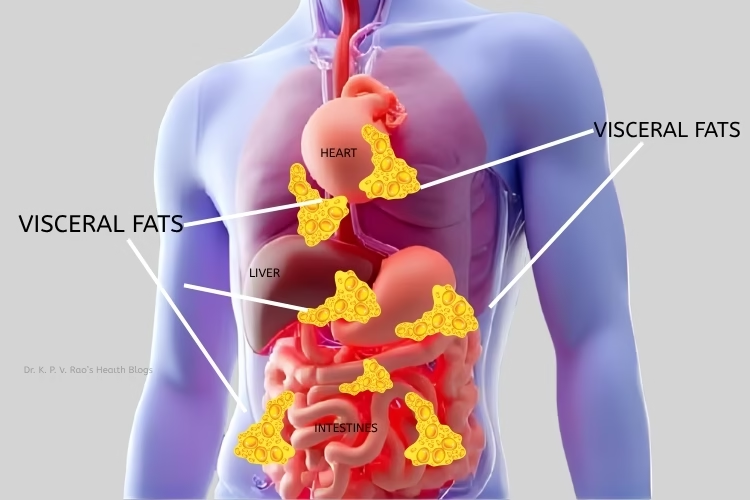
Various health organizations provide guidance to help individuals measure visceral fat levels and understand the potential risks associated with excessive accumulation.
Generally speaking, the commonly accepted measure of visceral fat is waist circumference.
For men, a waist circumference over 40 inches is considered high, while for women, a waist circumference over 35 inches is generally considered too high. These measurements are key indicators of increased visceral fat, which may increase the risk of cardiovascular disease and diabetes. However, it’s important to realize that these numbers can vary based on a variety of factors, including body size, gender, and age.
For example, fat distribution may differ between individuals with different body shapes (e.g., apple- or pear-shaped).
Additionally, hormonal changes, especially during menopause, may lead to an increase in abdominal fat.
Helpful Resources – Cleveland Visceral Fat Clinic
Age also plays a role, as metabolic rates tend to decrease as we age, which can lead to more visceral fat accumulation. Therefore, it is critical that individuals understand these effects when assessing visceral fat levels.
Professional advice advises individuals to maintain a balanced lifestyle that combines regular physical activity and a nutritious diet to help manage visceral fat. Engaging in aerobic exercise and strength training can help effectively reduce this condition, thereby promoting better health outcomes. .
Effective Strategies for Losing Excess Visceral Fat
Managing and reducing excess visceral fat requires a multifaceted approach, including
- dietary modification,
- engage in regular physical activity, and
- Stress Management Techniques.
Combining these strategies not only promotes healthier body composition but also significantly reduces the health risks associated with visceral fat.
A balanced diet plays a vital role in reducing visceral fat levels. Focus on nutrient-dense, whole foods like fruits, vegetables, whole grains, lean proteins, and healthy fats.
Limiting your intake of processed foods, sugary drinks, and high-fat snacks can further help curb this form of fat. Additionally, incorporating eating habits such as the Mediterranean diet, which emphasizes healthy fats and lean protein, may be beneficial. Research shows that a fiber-rich diet can help control weight and reduce visceral fat, thereby enhancing overall health.
Regular physical activity is the basis for combating visceral fat. The goal is to combine aerobic activity (such as walking, swimming, or biking) with strength training.
The World Health Organization (WHO) recommends at least 150 minutes of moderate aerobic exercise or 75 minutes of vigorous exercise per week, supplemented by two or more days of muscle-strengthening activities. Such a regimen can effectively reduce visceral fat levels and improve metabolic health.
Stress management should not be ignored as chronic stress can lead to an increase in visceral fat.
Techniques such as meditation, yoga, or tai chi can promote relaxation and help reduce stress-related weight gain.
Additionally, getting enough sleep is crucial, as poor sleep quality is associated with increased visceral fat accumulation.
Medical intervention may be necessary for different people, especially when lifestyle changes do not produce adequate results.
If the above methods don’t work, talk to your doctor about potential prescription medications aimed at weight control or available surgical options that specifically target visceral fat.
Multiple studies have shown that high visceral fat levels are best reduced by a comprehensive approach that includes lifestyle changes and medical support. “
Resources such as the American Heart Association and the National Institutes of Health provide further insights into strategies for achieving healthier fat distribution and mitigating the health risks associated with high levels of visceral fat. You can refer to the following articles –
in conclusion
We have reached the end of this article and I hope you have a general understanding of what visceral fat is and how to maintain or resolve excess visceral fat.
In my next article, I will discuss more herbal products that can help enhance our health.
Please stay tuned on Dr. KPV Rao’s health blog or contact me here –
Please enable JavaScript in your browser to submit the form
last words
If you found this article useful, please share it on the social media channels below or you can click here to tweet –
Understanding Visceral Fat: Its Risks and Management Share to X
Let’s meet in the next article. goodbye.