

Struggling with Stubborn Belly Fat That Just Won’t Go Away?
You’ve tried eating healthy. You’ve tried working out.
Yet those same problem areas remain… and it’s frustrating.
What if the real issue isn’t your diet…
but your body’s internal fat-burning switch?
FREE Training Video Reveals:
The Breakthrough Method to “Vaporize” Stubborn Fat Cells
(No extreme diets. No endless cardio. No stress.)
Discover how real people are finally burning fat, naturally and consistently.
Click below to watch your FREE training while it’s still online:
➡️ YES! Show Me The Free Video
Hello everyone. Welcome to another helpful article. Today we will learn about an imaging technique called a Dexa scan.
What is a DEXA scan?
A DEXA scan, or dual-energy X-ray absorptiometry scan, is a medical imaging technology specifically used to assess bone density and other body composition.
Mainly used to assess the risk of osteoporosis and fractures, this scan uses two different energy levels of X-rays to determine the amount of mineral (calcium) present in the bones and to differentiate between the amount of lean muscle and fat in the body.
Its non-invasive nature makes it an attractive option for both patients and healthcare providers as it requires no needles or injections, providing a comfortable experience during the evaluation process.
The process of a DEXA scan is relatively simple. Patients lie flat on the scanning table as the machine passes over them, emitting a mixture of low-dose X-rays.
This technology not only accurately measures bone density, but also effectively calculates the muscle and fat composition of the entire body.
During my own DEXA scan, I observed the seamless operation of the device and the precision with which it analyzed my body composition, producing results that helped me make informed health decisions. “
Doctors often recommend a DEXA scan based on a variety of factors, including age, gender, and medical history. For example, postmenopausal women and older adults are often recommended to have this scan given their increased risk of osteoporosis.
In addition, the results of a DEXA scan can serve as a baseline for tracking changes in bone density over time, especially for those undergoing treatments or lifestyle changes designed to improve bone health.
In short, DEXA scans are a valuable tool for assessing body composition, highlighting their important role in monitoring bone health, muscle mass and body fat.
With its advanced technology and non-invasive approach, its reliability and accuracy continue to gain recognition in clinical and research settings.
Let’s learn about this useful imaging technology today…
Indications for DEXA Scanning
There are several signs of this important diagnostic tool that can significantly impact an individual’s health management and preventive care strategies.
Various factors, including age, gender, family history, medical conditions, and lifestyle choices, can guide your doctor in recommending a DEXA scan.
Because of the increased risk of osteoporosis and related fractures associated with aging, regular DEXA scans are generally recommended for people over the age of 50.
Research shows that postmenopausal women are particularly susceptible to bone density loss, so early screening is needed to catch potential problems before they progress.
While the risk is generally lower for men, those with conditions that may affect hormone levels or bone health (such as low testosterone levels) may also benefit from a DEXA scan.
Family history also plays a significant role. Patients with a family history of osteoporosis or similar conditions may be advised to schedule a DEXA scan even if they are not showing symptoms.
Likewise, people with certain medical conditions, such as rheumatoid arthritis or those on long-term corticosteroid treatment, are at higher risk for loss of bone density and should consider regular evaluation with a DEXA scan. “
Lifestyle choices can also influence the decision to initiate a DEXA scan.
Factors such as excessive alcohol consumption, smoking, and a sedentary lifestyle can all contribute to poor bone health, prompting healthcare providers to recommend DEXA scans to monitor patients’ conditions. “
By identifying at-risk populations through these different signs, healthcare professionals can implement timely interventions to promote long-term health and wellness.
What does a dexa scan show?
Interpreting the results of a DEXA scan or dual-energy X-ray absorptiometry scan involves understanding measurements of bone density, muscle mass, and body fat percentage.
These scans generate comprehensive reports that can guide healthcare providers in assessing a patient’s health, particularly regarding osteoporosis and body composition.
The main focus of a DEXA scan is the measurement of bone mineral density (BMD), which is evaluated against established reference values to determine the risk of fractures and bone disease.
Typically, bone density results are expressed as T-scores and Z-scores.
The T-score compares an individual’s bone density to that of a healthy young person. A score of -1.0 or higher is considered normal, +/-1.0 to -2.5 indicates low bone density (osteopenia), and -2.5 or less indicates osteoporosis.
The Z-score compares a patient’s bone density to that of age-matched peers and is particularly valuable for diagnosing bone health in younger people.
In addition to bone density, DEXA scans also assess body composition by measuring fat and lean mass. The results report body fat percentage, which is important in determining overall health risk.
For adults, a healthy body fat percentage is typically 10-20% for men and 18-28% for women. Values outside these ranges may indicate obesity or underweight, which may require further investigation or lifestyle changes.
Healthcare professionals interpret these findings in conjunction with the patient’s medical history and other diagnostic tests. Factors such as age, gender and ethnicity can affect these values, so the reference ranges are adjusted accordingly to provide a personalized health assessment.
This nuanced approach ensures individuals receive tailored advice designed to improve or maintain bone health and overall body composition.
Preparing for dexa scanning
If your doctor recommends you have a Dexa scan, you must follow these instructions:
- Avoid eating or drinking anything except water for at least 4 hours before your scan.
- Tell your doctor if you are pregnant, suspect you may be pregnant, or have a history of allergy to contrast media.
- Remove any jewelry, glasses, or other items that may interfere with the scan.
- Discuss any medications you are taking with your healthcare provider, as some may need to be paused.
- Arrive early to complete all necessary paperwork and relax before your scan.
Steps to perform a Dexa scan

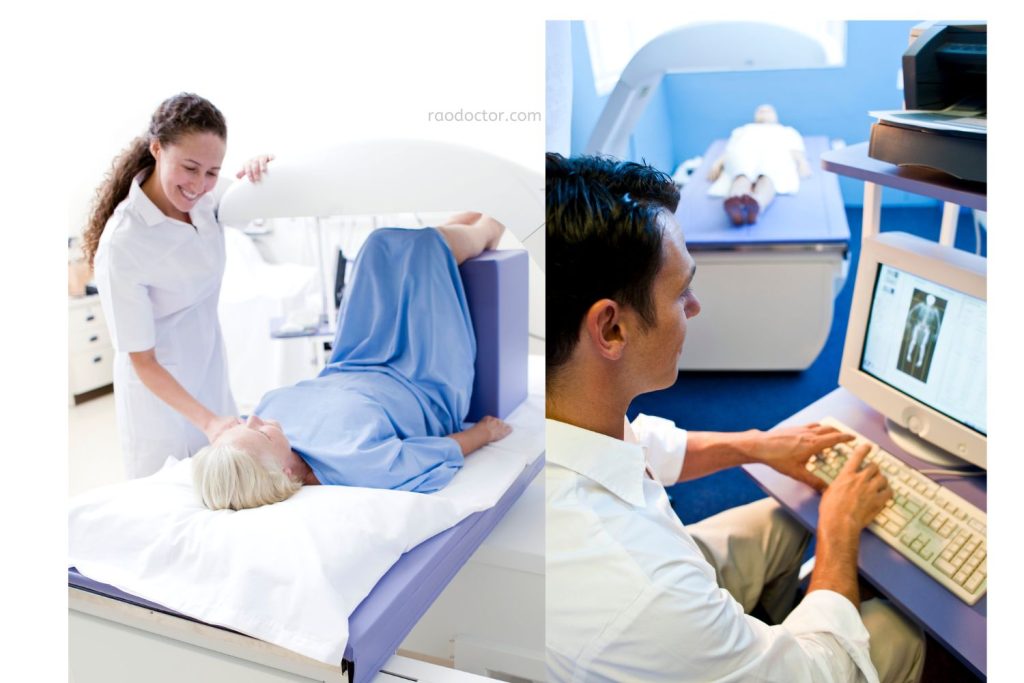
- Lie on the scanning table, usually on your back [as shown above]. The technician will position your body to align with the scanner.
- Remain still during the scan, which usually lasts about 10-30 minutes.
- The machine will take images of your bones, usually focusing on your hips and spine.
- After the scan, you can get dressed and resume normal activities.
- The results will be analyzed and shared with you at a follow-up appointment.
How to read dexa bone density scan results?
Bone density results are an important indicator of an individual’s bone health and usually come from a dual-energy X-ray absorptiometry (DEXA) scan.
This non-invasive imaging technology measures the density of minerals in bones, providing detailed analysis through two key parameters: T-score and Z-score [see the image below].

Knowing these scores can help assess a person’s fracture risk and overall bone health.
The T-score compares an individual’s bone density to that of a healthy young person and serves as an important benchmark.
A T-score of -1.0 or higher indicates normal bone density, while a score between -1.0 and -2.5 indicates lower bone density, called osteopenia.
A T-score of -2.5 or less classifies an individual as having osteoporosis, significantly increasing the risk of fractures.
Therefore, a higher T-score reflects better bone health, while a lower score indicates the need for intervention to prevent complications.
Z-scores, on the other hand, evaluate bone density in relation to age, gender, and race. This score helps determine whether bone density is appropriate for an individual’s body type.
A Z-score below -2.0 is generally considered below average and may prompt further investigation to explore potential health issues affecting bone density, particularly in younger people. In contrast, Z-scores between -2.0 and +2.0 are generally considered normal.
Therefore, T-scores and Z-scores derived from DEXA scans play an important role in understanding human bone health.
Why and when did your doctor recommend a Dexa scan?
The above dexa scan scores can help your doctor determine if you have any bone health issues [e.g. osteoporosis] or body fat [obesity] and muscle mass issues such as sarcopenia.
Tracking your progress is like keeping score in a game; it guides you with strategies to improve performance and make smart choices that strengthen your defenses against potential setbacks like osteoporosis and sarcopenia, as well as build bone strength and reduce the risk of fractures. .
Useful Resources – DXA Body Composition Analysis
We’ll stop here and learn more about this useful imaging technique in the next article.
In the meantime, if you found this article useful, please share it with your friends via the social media icons at the bottom of this article or Click to tweet below –
Dexa scan – what it is and what it is used for Share to X
goodbye. See you in the next article. Now released. You can access it by clicking here – Benefits of Dexa Scanning.
You can get my latest articles in your inbox by joining my email list:
Please enable JavaScript in your browser to submit the form